Book
Thinking, Fast and Slow
★★★★☆
January 30, 2026 · by Elliot Rhodes
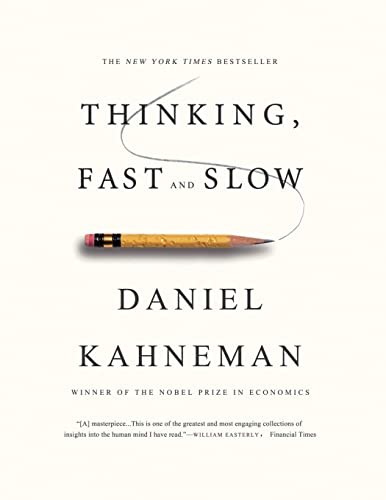
The System One and System Two framework has escaped this book so thoroughly into general conversation that I went in assuming I already knew most of what it had to teach me. I didn’t. Watching Kahneman actually build the case, decades of his own research with Tversky, study after study showing exactly where fast, intuitive judgment quietly overrides slower, effortful reasoning, is a different experience than knowing the vocabulary secondhand.
The honest complaint that shows up across a lot of reviews, and one I share, is length and density. This is not a book you read in a weekend, and more than one reader admitted to skimming sections that got too deep into the specific research methodology rather than the conclusions, which I understand completely, there were stretches where I wanted the finding a full chapter before Kahneman got around to giving it to me. He’s a researcher writing for a general audience, not a science journalist writing for one, and that shows in the pacing.
There’s a specific confusion I ran into that I saw echoed almost word for word by another reader, the distinction between the gambler’s fallacy, expecting heads after a run of tails, and regression to the mean, expecting a decline after an unusually good result, never got explained cleanly enough for me to feel confident I could apply it correctly on my own. Both are about overcorrecting for randomness, and the book gestures at why they’re different mechanisms without landing the distinction the way it lands almost everything else.
None of that changes how useful this book actually is once you’ve internalized even half of it. I’ve caught myself mid-decision more than once since finishing, actually noticing System One reaching for an answer too fast and forcing myself to slow down. That’s a rare thing for a book to actually change in practice rather than just in theory. Four stars, dense but worth the density.